- The Child Maintenance Service (CMS) charges a percentage of the paying parent's gross weekly income: 12% for one child, 16% for two and 19% for three or more, on income from £200 to £800 a week.12 Above £800 a week the extra income is charged at 9%, 12% or 15%, and income over £3,000 a week is ignored.2 On £600 a week that is £72 for one child and £96 for two, before any shared care.
- The rates are set in law, not by tax year, and apply in England, Scotland and Wales. Northern Ireland has its own Child Maintenance Service, which uses the same rates.6
Which rate applies?
The rate depends on the paying parent's gross weekly income, before tax and National Insurance, after pension contributions.13
| Gross weekly income | Rate | What is paid |
|---|---|---|
| Under £7 | Nil | Nothing |
| £7 to £100, or on a qualifying benefit | Flat | £7 a week, however many children |
| £100.01 to £199.99 | Reduced | £7 plus a percentage of income over £100 |
| £200 to £800 | Basic | 12%, 16% or 19% of income |
| £800.01 to £3,000 | Basic Plus | Basic on the first £800, then 9%, 12% or 15% |
Basic and Basic Plus percentages
Children here means children the maintenance is for (qualifying children).2
| Children | Basic (up to £800) | Above £800 | On £500 a week | On £1,000 a week |
|---|---|---|---|---|
| 1 | 12% | 9% | £60 | £114 |
| 2 | 16% | 12% | £80 | £152 |
| 3 or more | 19% | 15% | £95 | £182 |
The reduced rate
Between £100 and £200 a week, the amount is £7 plus a percentage of income over £100.3 For one child and no other children, £150 a week gives £7 + 17% of £50 = £15.50.
The percentage is lower when the paying parent also supports other children in their own home.3
| Children the maintenance is for | No other children | 1 other | 2 others | 3 or more others |
|---|---|---|---|---|
| 1 | 17.0% | 14.1% | 13.2% | 12.4% |
| 2 | 25.0% | 21.2% | 19.9% | 18.9% |
| 3 or more | 31.0% | 26.4% | 24.9% | 23.8% |
Shared care: overnight stays
If the child stays overnight with the paying parent on average at least one night a week (52 nights a year), the amount goes down.12 At 175 nights or more it is halved and a further £7 a week comes off for each child in that band.2 The total cannot fall below £7 a week on the Basic, Basic Plus or Reduced rates.25
| Nights a year | Reduction | Weekly maintenance |
|---|---|---|
| 0 to 51 | None | £72 |
| 52 to 103 | One-seventh | £61.71 |
| 104 to 155 | Two-sevenths | £51.43 |
| 156 to 174 | Three-sevenths | £41.14 |
| 175 or more | One-half | £29 |
Count your overnight stays with the shared-care nights calculator →
Collect and Pay fees
If the CMS collects the money, it adds 20% for the paying parent and takes 4% from the receiving parent. Direct Pay has no collection fees.4 On a £72 weekly amount the paying parent pays £86.40 and the receiving parent gets £69.12.
In June 2025 the government said it plans to remove Direct Pay and change the fees to 2% for receiving parents and compliant paying parents and 20% for paying parents who do not pay. This needs new legislation and has not started; the government's aim is 2027 to 2028.7 Until then the 20% and 4% fees apply.
When the CMS cannot work it out
If the paying parent does not give the information needed, the CMS can set a default rate of £39 a week for one child, £51 for two and £64 for three or more until it can.3 GOV.UK's summary page shows £38 for one child; the regulations and DWP's detailed guide say £39, so we use £39.2
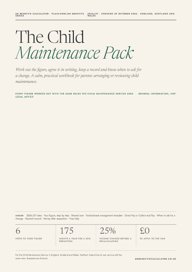
Before you go
Child Maintenance Pack
- The 2026/27 rates and your figure, step by step
- A shared-care diary and an arrangement template
£4.99 one-off · full refund if you ask within 14 days