Separation

Benefits after separation: a money checklist for parents

Written by James Whitfield · Updated 29 October 2026 · 6 min read · Checked against 2026/27 DWP & HMRC rates
Contents (6 sections)
  1. Quick answer
  2. 1. Report the change
  3. 2. Child Benefit
  4. 3. Child maintenance
  5. 4. Universal Credit and other help
  6. 5. Council Tax
Quick answer
  • After separating, report the change to any benefit you get, check who claims Child Benefit, work out child maintenance, check whether you can now claim Universal Credit as a single person, and ask your council about the 25% single person discount on Council Tax.1234

1. Report the change

If either of you gets Universal Credit, the claim changes when you stop living together, so report it straight away.4 The same applies to the Child Maintenance Service if you already have a case.5

2. Child Benefit

Only one person can get Child Benefit for a child. If you share care, agree who claims; if you cannot agree, HMRC decides.1 For 2026/27 it is £27.05 a week for the eldest child and £17.90 for each other child, so £44.95 a week for two.6

3. Child maintenance

The paying parent usually pays a share of gross income: on £600 a week, £72 for one child or £96 for two, less shared care.7 Maintenance you receive does not reduce Universal Credit.8 You can arrange it between you or use the CMS; do whatever is safe for you.

4. Universal Credit and other help

As a single parent your Universal Credit is worked out on your own income and savings, which can mean more help, including up to 85% of childcare costs.8

5. Council Tax

GOV.UK says: “You’ll get 25% off your bill if you pay Council Tax and either: you live on your own, or no one else in your home counts as an adult” (people who are disregarded do not count).2 You may also qualify for Council Tax Reduction, which each council runs differently.
Before you go

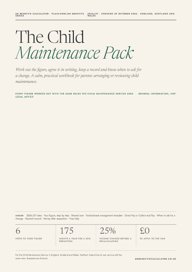
Child Maintenance Pack

18 pages · instant download

  • The 2026/27 rates and your figure, step by step
  • A shared-care diary and an arrangement template
See what's in the pack →

£4.99 one-off · full refund if you ask within 14 days

Related guides

The questions most people ask after reading this.

Frequently asked questions

Who gets Child Benefit when parents separate?
Only one person can get it for each child. Parents agree who claims, usually the parent the child mainly lives with; if you cannot agree, HMRC decides.
Does child maintenance affect my benefits?
Child maintenance you receive does not affect Universal Credit.
Do I get a Council Tax discount when my partner moves out?
Usually 25% off if you are now the only adult in the home. Ask your council.

Try the calculators

Check your own figures: no login, no sign-up, instant results.

Sources & references

The figures and rules in this guide are drawn from the official UK government sources below. Rates are the confirmed 2026/27 amounts. Each link opens the relevant official page in a new tab.

  1. GOV.UK: Child Benefit, eligibility (checked 29 October 2026) www.gov.uk/child-benefit/eligibility
  2. GOV.UK: Council Tax, who has to pay (checked 29 October 2026) www.gov.uk/council-tax/who-has-to-pay
  3. GOV.UK: Calculate your child maintenance (checked 29 October 2026) www.gov.uk/calculate-child-maintenance
  4. GOV.UK: Universal Credit, report a change of circumstances (checked 29 October 2026) www.gov.uk/universal-credit/changes-of-circumstances
  5. GOV.UK: Child Maintenance Service, report a change (checked 29 October 2026) www.gov.uk/child-maintenance-service/change-of-circumstances
  6. GOV.UK: Child Benefit rates (checked 29 October 2026) www.gov.uk/child-benefit-rates
  7. GOV.UK: How child maintenance is worked out (checked 29 October 2026) www.gov.uk/how-child-maintenance-is-worked-out
  8. GOV.UK: Universal Credit if you have children (updated 20 October 2026) (checked 29 October 2026) www.gov.uk/guidance/universal-credit-if-you-have-children
Verified against published UK government guidance.
Independent guide only. Written using published 2026/27 DWP and HMRC figures. Not an official government service. For case-specific guidance, contact Citizens Advice or a welfare-rights adviser. Methodology · Editorial standards

Written and reviewed by James Whitfield and the editorial team.

Every figure is checked against current GOV.UK guidance and reviewed for the 2026/27 tax year. We explain the numbers in plain English with worked examples. Editorial standards · About us