- Statutory Paternity Pay is £194.32 a week, or 90% of your average weekly earnings if that's lower, for 1 or 2 weeks.1 Two weeks at the standard rate is £388.64 before tax and National Insurance.
- To get it you need average earnings of at least £129.00 a week and 26 weeks' service with your employer by the end of the 15th week before the baby is due.1
Statutory Paternity Pay calculator
2026/27 rates. Nothing you type is saved or sent to analytics.
Leave and pay are different
Paternity Leave is a right from your first day in a job, as long as you're an employee and give the right notice. Statutory Paternity Pay has the earnings and service tests.1 So someone who's just started a job can take the leave but may not be paid for it, unless their contract says so.
You can take 1 week or 2, together or as two separate weeks. The leave can't start before the birth and must end within 52 weeks of it.1
The 90% rule
For most people the pay is simply £194.32 a week, because 90% of their earnings is more than that. The 90% rule only bites if your average weekly earnings are under about £215.91.
| Average weekly earnings | Pay a week | 2 weeks |
|---|---|---|
| £129.00 | £116.10 | £232.20 |
| £150.00 | £135.00 | £270.00 |
| £180.00 | £162.00 | £324.00 |
| £215.91 | £194.32 | £388.64 |
| £400.00 | £194.32 | £388.64 |
| £800.00 | £194.32 | £388.64 |
Notice you need to give
Tell your employer the due date at least 15 weeks before the baby is due, then give at least 28 days' notice of when you want your leave to start and whether you want 1 week or 2. Changing the start date also needs 28 days' notice.1
For babies due on or after 26 July 2026 both notice periods apply as normal.1
Worked example
Tom works 25 hours a week in a café and averages £180 a week. 90% of that is £162.00, less than £194.32, so that's his weekly rate. Two weeks of leave pays £324.00 before tax.
His household is on Universal Credit. Statutory Paternity Pay counts as earnings for UC, so his next payment adjusts, the same as a normal wage would.2
Adoption and surrogacy
When a couple adopts, one partner can get adoption pay and leave and the other may get paternity leave and pay instead.3
Want more than 2 weeks?
Shared Parental Leave lets the mother end maternity leave early and pass weeks to her partner: up to 50 weeks of leave and 37 weeks of pay between you.4
Working out average weekly earnings
Your employer works out average weekly earnings from what you were paid in a set period before the qualifying week, before tax and National Insurance. Overtime, bonuses and commission paid in that window count.
If you're paid monthly, they convert to a weekly figure, so a salary of £2,000 a month is about £461 a week, well over the standard rate. If your pay varies a lot, check your payslips for the relevant weeks rather than your usual pay.
Self-employed partners can't get Statutory Paternity Pay, because it's paid by an employer. If that's you, the household may still be able to get Universal Credit while you take time off.
Work out your paternity pay
Enter your average weekly earnings before tax, the weeks you'll take, and whether you'll have 26 weeks' service in time.
Statutory Maternity Pay calculator
Before you go
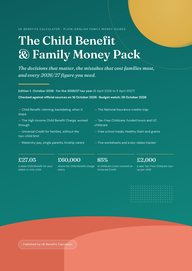
Family Money Pack
- A fill-in Child Benefit charge calculator
- A Tax-Free Childcare vs UC childcare comparison
£1.99 one-off · full refund if you ask within 14 days