- Universal Credit refunds 85% of what you pay a provider, but never more than £1,071.09 in an assessment period with one child in childcare, or £1,836.16 with two or more.1 Tax-Free Childcare tops up your payments by 25%, to a ceiling of £500 a quarter for each child.2 The catch: it isn't available to anyone with a live UC claim.1
- For most people on lower pay UC is worth more; as pay rises and UC shrinks, Tax-Free Childcare can overtake it. The calculator compares the two for you.
Universal Credit childcare or Tax-Free Childcare?
For working parents. 2026/27 rates, checked 22 November 2026. Nothing you type is saved or sent to analytics.
Starting a job: paying the first month upfront
Normally you pay the provider yourself and claim the cost back through UC. When you start a job, increase your hours or return from parental leave, you can ask for help with upfront costs such as deposits and retainers. You may be able to have your first month covered, paid straight to the provider, and you won't have to pay it back.1
Apply before you pay: send a message in your UC account or speak to your work coach.1
Reporting costs so they're paid
Report costs as soon as you can. UC can cover childcare paid for in your current or previous assessment period, or childcare in the next 3 assessment periods if you paid in advance.1
You (and your partner, if you have one) must be in paid work or starting a job in the next month.1
Worked example: a lone parent starting work
Sam is single, 25 or over, with one child, rent of £650 and take-home pay of £1,600. Nursery costs £900 a month. With childcare, Sam's UC is £1,498.69 a month (the costs add £765.00). Tax-Free Childcare would give £166.67. UC is clearly better.
A couple with one child, rent of £900 and £5,000 take-home pay get £120.76 of UC with the same £900 nursery bill, against £166.67 from Tax-Free Childcare. Tax-Free Childcare wins there.
Tax-Free Childcare in brief
The government puts in a quarter of whatever you pay into the account (£2 on each £8), capped at £500 per child each quarter, which is £2,000 over a year; for a disabled child the caps are £1,000 and £4,000. Children qualify up to 11, or 16 if disabled, and the scheme has its own work conditions.2
Sam's costs at different nursery bills
Keeping Sam's pay and rent the same, this is how the UC childcare element grows with the bill until it hits the one-child cap of £1,071.09. Figures are from our UC engine at 2026/27 rates.
A £300.00 nursery bill gives Sam a UC childcare element of £255.00, so Sam's own share is £45.00; Tax-Free Childcare on that bill would be £60.00.
A £600.00 nursery bill gives Sam a UC childcare element of £510.00, so Sam's own share is £90.00; Tax-Free Childcare on that bill would be £120.00.
A £900.00 nursery bill gives Sam a UC childcare element of £765.00, so Sam's own share is £135.00; Tax-Free Childcare on that bill would be £166.67.
A £1,200.00 nursery bill gives Sam a UC childcare element of £1,020.00, so Sam's own share is £180.00; Tax-Free Childcare on that bill would be £166.67.
A £1,500.00 nursery bill gives Sam a UC childcare element of £1,071.09, so Sam's own share is £428.91; Tax-Free Childcare on that bill would be £166.67.
Above about £1,260 a month, 85% of the bill is more than the cap, so each extra pound is Sam's. With two children in childcare the cap rises to £1,836.16: the same £1,500 bill for two children adds £1,275.00 to Sam's UC.
Timing: paying in advance, and reporting late
GOV.UK says UC can cover childcare you paid for in your current or previous assessment period, or childcare taking place in the next 3 assessment periods if you paid in advance.1 Two practical consequences follow.
Paying a term upfront: if Sam pays £2,700.00 in September for three months of nursery, that's £900.00 of childcare in each of the next three periods. Reported straight away with the dates it covers, each of those months can carry an element of £765.00. Paying for more than three periods ahead means the later months fall outside that window until they come into range.
Reporting late: a bill paid in one period and first reported two periods later falls outside the current-or-previous window. Upload the invoice and proof of payment in your journal in the same month you pay, even if the provider's receipt comes later.
A disabled child: the higher Tax-Free Childcare limit
Tax-Free Childcare doubles to £1,000 every 3 months for a disabled child, and runs to age 16 rather than 11.2 On a £1,800.00 monthly bill for one disabled child that's a top-up of £333.33 a month, against a UC element capped at £1,071.09. UC still usually wins while you're entitled to a reasonable UC award, because the element covers far more of the bill, but the gap narrows as pay rises.
When one partner isn't working
For a couple, both of you normally have to be in paid work, or starting a job in the next month. Sick leave or parental leave can still count. You may still be able to claim if your partner can't work because of a health condition, is eligible for Carer's Allowance, or has to be away temporarily.1
If neither exception applies, a couple where only one works gets no UC childcare element, and Tax-Free Childcare has its own work conditions, so check both before booking.
Before you switch from UC to Tax-Free Childcare
Choosing Tax-Free Childcare means ending your UC claim. You lose every part of the award, including help with rent and the child element, not just childcare. If your pay later falls, a new UC claim starts with new assessment periods and another wait for the first payment.
Run the comparison with your real figures, and again after a pay rise: the point where Tax-Free Childcare wins depends on your rent, children and earnings.
Before you go
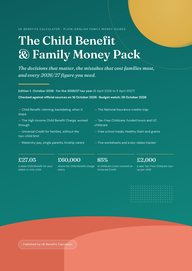
Family Money Pack
- A fill-in Child Benefit charge calculator
- A Tax-Free Childcare vs UC childcare comparison
£1.99 one-off · full refund if you ask within 14 days