| Child | 2025/26 | 2026/27 | 2027/28 |
|---|---|---|---|
| Eldest or only child | £26.05 | £27.05 | £28.00 |
| Each other child | £17.25 | £17.90 | £18.55 |
- From April 2027 Child Benefit goes up to £28.00 a week for the eldest or only child and £18.55 for each other child. HMRC lists these as provisional rates for the 2027 to 2028 tax year.1
- That is £0.95 a week more for the eldest child and £0.65 more for each other child, a rise of about 3.5% on the eldest rate. The same figures are in the Treasury's Budget 2026 rates annex.2
- Until then the 2026/27 rates of £27.05 and £17.90 apply.3 You do not need to do anything: existing claims move to the new rate.
What the rise is worth for your family
For one child the increase is £49.40 over a year. Each extra child adds another £33.80 a year, so a family with three children gets £117.00 more.
Payments usually arrive every 4 weeks,4 so a family with two children will see each payment rise from £179.80 to £186.20.
| Children | 2026/27 | 2027/28 | Extra a year |
|---|---|---|---|
| An only child | £27.05 | £28.00 | £49.40 |
| Two children | £44.95 | £46.55 | £83.20 |
| Three children | £62.85 | £65.10 | £117.00 |
| Four children | £80.75 | £83.65 | £150.80 |
How this rise compares with last year's
In April 2026 the eldest-child rate went from £26.05 to £27.05, a rise of £1.00, and the other-child rate from £17.25 to £17.90.1 This time the cash rise is a little smaller for the eldest child and the same for younger children.
Guardian's Allowance, paid to people bringing up a child whose parents have died, follows the same pattern: £22.10 in 2025/26, £22.95 now and £23.75 in 2027/28.1
The figures are labelled provisional because the uprating still has to be made in law. Rates published at this stage have normally gone ahead unchanged, but check GOV.UK in April.
Families who will not see the extra money
Capped households. Child Benefit counts towards the benefit cap,5 and DWP's proposed 2027/28 list keeps the cap at the same level.6 If your Universal Credit is already being reduced by the cap, the higher Child Benefit is matched by a bigger reduction, and your total stays the same.
Higher earners. The High Income Child Benefit Charge takes back 1% for each £200 of adjusted net income over £60,000, and all of it above £80,000.7 At £70,000 with two children, half of the new year's Child Benefit (£2,420.60) goes back as the charge, about £1,210.00.
Families who opted out of payments keep their claim but receive nothing, so the increase only matters if you choose to start payments again.
Universal Credit child amounts change too
Child Benefit is paid by HMRC; the Universal Credit child amount is set by DWP. DWP's proposed list raises it from £303.94 to £314.58 a month for each child, and the higher amount for a first child born before 6 April 2017 from £351.88 to £364.20.6
Universal Credit does not count Child Benefit as income, so a family on both gets both increases unless the benefit cap applies.
Worked example: two children and a part-time job
Aisha has two children and works part time. Her Child Benefit is £44.95 a week now, or £179.80 every 4 weeks.3
From April 2027 it becomes £46.55 a week, £186.20 every 4 weeks, and £2,420.60 over the year.1 That is £83.20 more than this year.
Her earnings are well above £881 a month, so the benefit cap does not apply to her,8 and she keeps the whole increase alongside her higher Universal Credit child amounts.
Worked example: a capped family of six
Take a couple with four children, no earnings and Universal Credit cut by the cap. Their Child Benefit is £349.92 a month now and would be £362.48 at the 2027/28 rates.1
Their Universal Credit is set at whatever brings the total to £1,835: £1,485.08 now, falling to £1,472.52 after the rise.1112 The Child Benefit goes up by £12.56 a month and Universal Credit comes down by exactly the same amount.
The higher Universal Credit child amounts in DWP's list do not help either, because the family's total is still held at the cap. Only an exemption, such as earnings above the threshold or a disability benefit in the household, changes that.
Higher earners: the charge on the new rates
The High Income Child Benefit Charge works on the year's Child Benefit, at 1% for each £200 of income over £60,000.7 With three children, a full year at the new rates is £3,385.20.
At an adjusted net income of £65,000 the charge would be a quarter of that, about £846; at £75,000 three-quarters, about £2,538. At £80,000 or more it is the whole amount.
The thresholds quoted are the current ones. Check HMRC's page for the 2027 to 2028 tax year before you decide whether to keep payments or opt out.
A single parent on both: what April 2027 adds
Shona is 29, has two children and is on Universal Credit. Before rent and earnings her award is £1,032.78 a month now. DWP's proposed 2027/28 rates of £443.21 for her standard allowance and £314.58 for each child would make it £1,072.37.6
Her Child Benefit, turned into a monthly figure, goes from £194.78 to £201.72. Most of her increase therefore comes through Universal Credit, not Child Benefit: £39.59 a month against £6.94.
She is working enough to be outside the benefit cap, so she keeps both increases. Had she been capped, neither would have reached her.
The 2027/28 rates as monthly figures
Budgets usually run by the month, and Child Benefit is quoted by the week. Multiplying by 52 and dividing by 12, the new rates come to £121.33 a month for an only child, £201.72 for two children, £282.10 for three and £362.48 for four.
Because the money arrives every 4 weeks rather than monthly, there are 13 payments a year, and one month in the year has two of them. Planning around the 4-weekly figure avoids a shortfall in the other months.
If you have opted out of payments because of the High Income Child Benefit Charge and your income falls below £60,000 in the 2027 to 2028 tax year, it may be worth asking HMRC to restart them.
New claims and backdating across April 2027
A claim can be backdated up to 3 months from the date you make it.9 A baby born in February 2027 whose claim is made in May would be paid at the 2026/27 rate for the weeks before the change and the new rate after it.
Twins and triplets are each a separate child, so the eldest-child rate goes to one of them only if there is no older child in the claim. The others are paid the lower rate.
Staying registered matters even when you get nothing. Opting out of payments because of the charge keeps your Child Benefit registration and the National Insurance credits that come with it.7 For a parent at home with a young child, those credits count towards the State Pension.
Child Benefit for young people aged 16 to 19 depends on the course they are on, and the new rates apply to them in the same way as to younger children.
Larger families: the rise in pounds
Five children go from £98.65 a week to £102.20, which is £184.60 more over a year. Six children go from £116.55 to £120.75, or £218.40 a year.1
Larger families are also the ones most likely to be capped, and for them the increase does not arrive at all unless an exemption applies. A family of eight that starts earning above the threshold before April 2027 gets both the new Child Benefit and the higher Universal Credit child amounts.
Who published what, and when
HMRC's rates page, updated on 10 November 2026, lists the 2027 to 2028 Child Benefit and Guardian's Allowance rates as provisional.1 DWP published its proposed rates for its own benefits, including Universal Credit, the next day, on 11 November 2026.6
For a family with four children, DWP's figures take the Universal Credit child amounts from £1,215.76 to £1,258.32 a month, while Child Benefit rises from £80.75 to £83.65 a week.
Child Benefit is run by HMRC for the whole UK, so the same rates apply in England, Scotland, Wales and Northern Ireland. Scottish Child Payment is the only child payment that differs by nation.
One child, a salary near £60,000
For an only child, a full year at the new rate is £1,456.00. If the higher earner's adjusted net income is £62,000, the charge is 10% of that; at £65,000 it is 25%, and at £70,000 half.7
In pounds, that is roughly £145, £364 and £728 for the year. Pension contributions and Gift Aid donations are taken off, grossed up by basic-rate tax, when adjusted net income is worked out, so a payment into a pension can bring the charge down.13
Whatever you decide about payments, keep the claim open. It is the claim, not the payments, that protects the credits and keeps the child on HMRC's records.
Checking your payments after the change
Child Benefit is usually paid every 4 weeks.4 Multiply the weekly rate for your family by 4 and compare it with the amount that lands in your account. For two children at the new rates that is £186.20.
If your payments after April 2027 still show the old amount, contact HMRC's Child Benefit Office.
If you are also on Universal Credit, look at your statement's benefit cap line. It is the quickest way to see whether the increase reaches you or is absorbed by the cap.
What if…
You have a baby in 2027. Claim as soon as the birth is registered; the claim can be backdated up to 3 months and is paid at whatever rate applies on each date.9
You live in Scotland. Scottish Child Payment is separate and paid by Social Security Scotland: £28.20 a week for each child under 16 now.10 No 2027/28 figure had been published when we checked.
Your child turns 16 in 2027. Child Benefit continues only if they stay in approved education or training; tell HMRC when they enrol.
You are not sure whether you are capped. Your Universal Credit statement shows a benefit cap deduction if one applies.
Common mistakes
Thinking you must reapply for the new rate. Existing claims change automatically.
Expecting more money while capped. The cap is frozen, so a capped family's total does not rise.
Reading the provisional rates as already in payment. Until April 2027 the 2026/27 rates apply.
Next steps
1. Check your current payment against the 2026/27 table on our Child Benefit rates page.
2. If your income is near £60,000, look at how the charge works before deciding whether to keep payments.
3. If you are capped, check whether anyone in the household could qualify for an exemption.
Free Child Benefit calculator 2026/27 UK (free)
Before you go
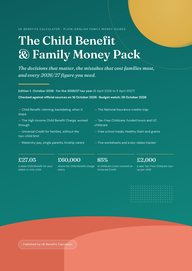
Family Money Pack
- A fill-in Child Benefit charge calculator
- A Tax-Free Childcare vs UC childcare comparison
£4.99 one-off · full refund if you ask within 14 days